
Welcome to the ezine produced by SGI Buddhists that prompts the positive, kindles the constructive, highlights the hopeful and leaves you feeling - well, up!
Published on Monday, 25 March 2013 17:10 | |  |
| 
|
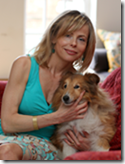
Three years ago my mother died and we inherited her 13-year-old Shetland sheepdog Nutkin, writes Julia Stephenson. His sibling had just died with severe joint damage and arthritis and Nutkin was in similarly bad shape too. He was overweight, listless, limped badly and his teeth were covered in plaque.
Published on Saturday, 23 March 2013 14:32 | | |
|
To a group of pioneering anthropologists, 'weird' means both unusual and 'Western, Educated, Industrialized, Rich and Democratic'. Do their findings suggest another validation of the Buddhist principle of esho funi - the oneness of life and the environment?
Published on Wednesday, 20 March 2013 11:26 | | |
|
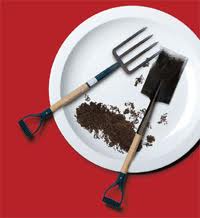
Landshare is a scheme to bring together people who want to grow their own food but don’t have the land, with folk who have a bit of land to spare and are willing to share, writes Geraldine Royds-Betz.
Published on Wednesday, 20 March 2013 17:33 | | |
|

Humans are not wired for aggression and violence, says author and social thinker Jeremy Rifkin. On the contrary, we’re soft wired for attachment, companionship and a powerful drive to belong.
Published on Friday, 15 March 2013 13:33 | | |
|
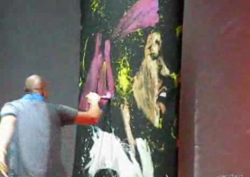
One amazing painter!
Published on Thursday, 07 March 2013 16:18 | | |
|
The current revolution in neuroscience is reshaping the way we see the world. Just as Darwin changed the way we thought about our origins, new research is altering our understanding of brain function and its effect on human behaviour.
Published on Tuesday, 26 February 2013 08:15 | | |
|

In society and in our educational systems we tend to overrate IQ, writes David Hare. To paraphrase the multiple intelligences theory of esteemed psychologist Howard Gardner, we measure how clever you are (intellectually) rather than how you are clever (which could include loads of other talents, such as fixing a car or knowing how to build rapport with people).